14mm
An ultra-wide view: the room bends at its edges, near things loom and far things fall away fast.
104° across. Reads as Wide-angle.
“14mm lens inches from a climber's hand on the rock, the valley floor falling away far below behind it.”

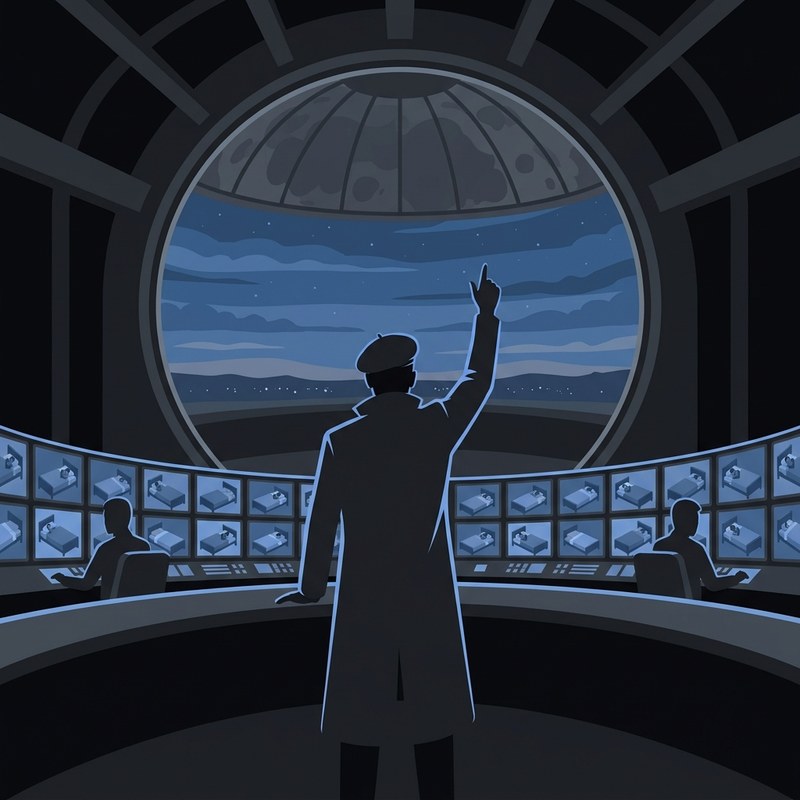
“I decide where the camera stands, how it moves and what the frame holds.”
The Director thinks in shots. Give it a moment in your story and it works out the framing, the move and the lens, then reads the finished shot back against the same standards.
Your agent asks a film crew before it writes a shot, and you can watch them answer.
See how it worksYour shot staged and played on a simple 3D set, cameras and all, before you spend anything on video.
See how it worksOffered, never enforced. Write a technique in your own words and it is kept exactly as you wrote it, even when it is on no list.
The focal length, the glass or the series it comes from, any filters in front of it and the shutter behind it.
An ultra-wide view: the room bends at its edges, near things loom and far things fall away fast.
104° across. Reads as Wide-angle.
“14mm lens inches from a climber's hand on the rock, the valley floor falling away far below behind it.”
Very wide: a whole room in one frame, the depth between near and far stretched out.
90° across. Reads as Wide-angle.
“18mm lens in a narrow galley kitchen, the cook in the foreground and the whole room stretching to a window at the far end.”
Wide: body and place at once, the surroundings pulling their weight in the frame.
74° across. Reads as Wide-angle.
“24mm lens on two friends walking toward camera down a busy market street, the stalls on both sides in view.”
A little wider than the eye: natural, with room around the subject; the classic storytelling lens.
54° across. Reads as Normal.
“35mm lens on a woman at a cafe table, her face and the rainy street through the window behind her both telling the scene.”
Close to how the eye sees: no stretch and no squeeze, proportions left honest.
40° across. Reads as Normal.
“50mm lens at eye height on a man reading a letter on a park bench, proportions natural, the trees behind him gently soft.”
A portrait length: faces are flattered and the background falls soft and close behind them.
24° across. Reads as Telephoto.
“85mm lens close-up on a singer backstage, her face sharp and the crowded corridor behind her melting into soft shapes.”
Long: space compresses, the background stacks up behind the subject and the camera watches from far off.
15° across. Reads as Telephoto.
“135mm lens on a man crossing a busy avenue, the traffic and buildings behind him stacked tight against his shoulders.”
Very long: the world flattens into layers and the smallest move of the frame travels far.
10° across. Reads as Telephoto.
“200mm lens on a lone runner on a far hillside, the setting sun enormous and flat behind her.”
Wide oval bokeh and long horizontal flares; the picture announces itself as cinema.
“Anamorphic lens: a car's headlights at night stretch into long blue horizontal streaks across the frame, the street lamps behind it blooming into oval bokeh.”
Old uncoated glass: highlights bloom, edges go soft and the colour warms a little; the image feels remembered.
“Shot on vintage uncoated glass: a man in a 1970s living room, lamplight blooming softly around his face, the frame edges gently smeared and warm.”
The classic 2x scope look: oval bokeh, a soft glow on every edge, long blue horizontal flares and a little warmth, with the corners going low-contrast wide open while the centre holds.
“Shot on Panavision C-series anamorphic: a detective steps out of a bar at night, the neon throwing a long blue streak across the frame and the street lamps behind him drawn into ovals.”
Cooke's warmth inside a 2x squeeze: oval bokeh with a gentle roll-off, a soft amber flare in place of a hard blue line, and corners that hold sharper than vintage scope.
“Shot on Cooke Anamorphic/i: a bride turns in a warm hallway, the sconces behind her stretching into soft oval highlights and an amber flare washing the frame edge.”
Clean modern 2x anamorphic: a sharp centre, oval bokeh, a cooler controlled streak and straight lines that mostly stay straight.
“Shot on Hawk V-Lite anamorphic: a courier weaves a motorbike through night traffic, headlights drawing cool oval highlights and a thin controlled streak across the frame.”
Soft painterly 2x scope: big oval bokeh, warm colour, low contrast wide open, edges that smear and glow, and barrel distortion you can see.
“Shot on Kowa anamorphic: two dancers hold each other in a half-empty ballroom, the chandeliers smearing into wide warm ovals and the frame edges glowing.”
Raw Soviet scope: heavy oval bokeh, a pronounced glow, low contrast, big smeary warm flares threaded with a bright blue streak, and corners that come apart wide open.
“Shot on Lomo round-front anamorphic: a man smokes on a concrete balcony at dusk, the sodium lamps below blooming into heavy ovals and a blue streak cutting the frame.”
Vintage scope with a warm glow: pronounced oval bokeh, a wide golden flare threaded with a thin blue line, low contrast, and corners that smear wide open.
“Shot on Cineovision anamorphic: a girl leans from a car window on a desert road, the late sun throwing a wide golden flare and a thin blue line across the frame.”
Sharp with a deliberately gentle roll-off into the out-of-focus: round soft-edged bokeh with no onion rings, warm flattering skin, a low neutral flare, almost no distortion and no breathing on a focus pull.
“Shot on ARRI Signature Primes: a surgeon looks up from an operating table, her skin warm and sharp, the theatre lights behind her falling into round soft bokeh.”
Clinically sharp corner to corner at every stop: high micro-contrast, neutral cool-leaning colour, deep clean blacks, and a flare that stays a faint veil. The glass never draws attention to itself.
“Shot on Zeiss Master Primes: a technician reads a bank of instruments in a cold white corridor, every panel edge sharp and the blacks clean.”
Sharp and contrasty, a touch softer than a Master Prime wide open: neutral colour, blacks clean but not crushed, round bokeh with a faintly bright rim and a small neutral flare.
“Shot on Zeiss Ultra Primes: a teacher writes on a blackboard in an afternoon classroom, the chalk crisp and the room behind her honest.”
The Cooke look: warm, rounded and forgiving on skin, with a gentle roll-off from sharp to soft, open shadows, softly blooming highlights, creamy round bokeh and a golden flare that spreads rather than streaks.
“Shot on Cooke S4/i: a grandmother pours tea by a window, her skin warm and soft-edged, the garden behind her creamy and bright.”
Sharp with a natural three-dimensional roll-off that stands the subject off the background: neutral-to-warm colour, rich mid-tones, clean round bokeh with a soft bright rim, restrained flare and very low distortion.
“Shot on Leitz Summilux-C: a pianist plays in a dim hall, her hands and face standing clear off the darkness behind her.”
Even gentle sharpness across the frame with a soft natural edge to detail: warm slightly muted colour, smooth round bokeh with no hard rims, and a flare that blooms warm instead of streaking.
“Shot on Panavision Primos: a family sits down to dinner in a 1990s dining room, the colour warm and muted and every edge softly drawn.”
Very sharp, high contrast, modern and neutral: cool-neutral colour, clean blacks, round bokeh that can show a faint ring inside a point of light, and some ghosting against the sun.
“Shot on Sigma Cine FF: a cyclist drinks from a bottle after a climb, the sweat and the gravel sharp and the sky punchy behind him.”
A zoom that holds close to a prime at every focal length: sharp, warm and slightly soft-edged, with filmic colour, gentle contrast, round bokeh that softens toward the edges and a warm low-key flare.
“Shot on an Angenieux Optimo zoom: a reporter pushes through a crowded square, the frame tightening on a face across the plaza, the colour warm throughout.”
Sharp at the centre with a soft glowing edge wide open, tightening two stops down: cool slightly desaturated colour, lifted blacks, busy bright-rimmed bokeh, and a strong veiling flare with blue-white ghosts against a source.
“Shot on Zeiss Super Speeds wide open: a man waits in a strip-lit laundromat at 2am, the centre sharp, the edges glowing and the whites a touch cool.”
Soft, glowing and warm, gentle on every face: low contrast with milky shadows and blooming highlights, creamy swirl-free bokeh, an amber flare that washes the frame, and corners that go noticeably soft.
“Shot on rehoused Cooke Speed Panchros: a singer holds a microphone under a warm spotlight, the highlights blooming and the shadows milky.”
Warm, low in contrast and gently sharp: amber colour, lifted blacks, a halo around every bright edge, large smooth bokeh discs that go oval toward the corners wide open, and a warm streaking flare.
“Shot on Canon K35s: two boys ride bikes down a suburban street in late sun, the light haloing their shoulders and a warm flare catching the lens.”
Warm, low-contrast and gently soft: golden slightly yellow colour, shadows deep but open, soft round creamy bokeh, a warm veiling flare that lifts the whole frame, and a gentle fall-off in the corners.
“Shot on rehoused Super Baltars: a family argues across a kitchen table under a hanging lamp, the whole frame golden and the corners falling gently away.”
Soft-sharp with a gentle glow and no swirl: warm slightly muted colour, lifted blacks, smooth soft-edged round bokeh, and a warm diffuse flare that puts one small ghost against a hard source.
“Shot on rehoused Kowa Cine Prominars: a woman folds laundry by an afternoon window, the light warm and the edges softly glowing.”
Sharp and contrasty for vintage glass, a little clinical at the centre: neutral-to-cool punchy colour, busy bokeh with bright rims and a slight swirl on the fast focals, and hard greenish ghosting against a source.
“Shot on rehoused Nikon AI-S stills glass: a protester shouts into a megaphone in flat daylight, punchy and cool, the background busy behind her.”
A mist filter in front of the lens: highlights bloom and halo, contrast lifts a touch, skin smooths; the whole image goes gentle.
“Heavy diffusion filter on the lens: a couple under string lights, every bulb blooming into a soft halo and their faces glowing gently.”
A bright source catches the glass and scatters across the picture as streaks, rings or a wash; the camera admits it is there.
“Streak filter: the low sun sits just inside the top of frame behind a cyclist, throwing a bright horizontal streak and a soft veil across the picture.”
A thin veil of glow over the whole frame; lights spread and the air looks thick.
“Fog filter on a street lamp at night, its light spreading into a soft cloud around a man waiting beneath it.”
Reflections on glass and water drop away and skies deepen; colours read richer and surfaces clearer.
“Polarizer on the lens: a lake at noon with the glare gone, the stones on the bottom clear through the water.”
The film standard: movement carries the amount of blur an audience reads as normal, so it looks like movement and nothing calls attention to itself.
“180° shutter as a waiter crosses a busy restaurant, his movement carrying natural cinematic blur.”
Half the blur: every frame lands sharp, so movement reads hard and stepped, with an edge of panic in it.
“90° shutter through a hallway fight, each punch landing crisp and staccato rather than smeared.”
Almost no blur at all: movement breaks into separate brittle steps and the picture strobes.
“45° shutter as a car is struck at a junction, the impact strobing into brittle separate steps.”
Twice the blur: every movement smears across its own frame and the picture goes soft and dreamlike.
“360° shutter as a woman turns from a window half asleep, her movement smearing across the frame.”
How much of a person or a place the frame holds.
A part of a face or a thing; the world reduced to one detail.
“Extreme close-up on a single eye, the iris filling the frame as a candle flame flickers in its reflection.”
The face fills the frame; nothing else is allowed to matter.
“Close-up of an old woman's face as she hears the news, framed from chin to hairline.”
Head and shoulders; the face leads and the body still signals.
“Medium close-up of a courier at a doorstep, head and shoulders in frame as he waits for an answer.”
Waist up; a person's hands and face at once, the conversation frame.
“Medium shot from the waist up of a barista pulling an espresso, her hands and face both in frame.”
Bodies from the knees or mid-thigh up; a group can act together and still be read.
“Medium wide shot from the knees up of three friends leaning on a bar, the room visible behind them.”
Whole bodies and the room they stand in; geography before feeling.
“Wide shot of a full figure crossing an empty gymnasium, the whole room held around her.”
The place swallows the people; a body is a mark in a landscape.
“Extreme wide shot of a lone rider crossing a salt flat, a tiny mark under an enormous sky.”
The camera's height, which way the subject faces it, whose eyes it looks through and whether it tilts.
The camera looks straight up from the ground; the subject towers and the sky presses behind it.
“Worm's-eye view straight up from the pavement at a businessman stepping over the camera, towers behind him.”
The camera sits on the floor looking along it; the ground fills the lower frame and the world rises from it.
“Ground-level shot along a wet pavement as a pair of high heels walks toward the lens.”
The subject gains size and authority; ceilings and sky enter the frame.
“Low angle looking up at a basketball player at the free-throw line, the gym lights behind her head.”
The viewer stands with the character at their own height; no judgement is passed by the camera's position.
“Eye-level shot of a teacher at her desk, the camera at her own height, meeting her as an equal.”
The subject is diminished; the ground and its pattern take over.
“High angle looking down on a boy sitting alone in the middle of a playground.”
The scene becomes a diagram; faces vanish and arrangement is everything.
“Overhead top-down shot of a cook's hands over a chopping board, the ingredients laid out in a grid.”
The subject faces the lens squarely, looking past it or through it; symmetrical, confronting, nowhere to hide.
“Head-on shot of a runner charging straight at the camera down the centre line of an empty road.”
The face turned partway from the lens; both eyes read and the face gains shape.
“Three-quarter angle on a man at a bar, his face turned partway from the lens so both eyes read.”
The subject is seen exactly side-on; one eye, one line of the face, turned toward something off frame.
“Strict profile of a woman at a train window, her face side-on and turned toward the passing fields.”
The camera stands behind one person, their shoulder and the back of their head soft in the foreground, looking at who they face.
“Over-the-shoulder shot from behind a detective, his shoulder soft in the foreground, on the suspect across the table.”
The camera is a character's eyes; the audience sees exactly what they see, and nothing they do not.
“POV shot through a man's eyes as he opens a cellar door, his own hand on the handle and the dark stairs dropping away below.”
The horizon tips; the world is wrong and the viewer feels it before they can say why.
“Dutch angle tilted twenty degrees on a man walking down a hotel corridor, the horizon leaning.”
How much of the depth is sharp, and any words on where it falls.
One plane is sharp and the rest dissolves; lights behind melt into soft discs and the eye is told where to look. Wide open, around T1.4 to T2: the softest background there is, and the least room for anyone to move before they lose focus.
“Shallow depth of field on a violinist's face, the orchestra behind her dissolving into soft blur.”
The subject is sharp and the background softens gently but stays readable; the eye is guided without the place disappearing. The working stop, around T2.8 to T5.6: separation with enough depth that a performance can move.
“Medium depth of field on a chef at the pass, the kitchen behind him softened but still readable.”
Foreground and background hold at once; the frame can stage on several planes. Stopped down, from about T8: the deeper the stop, the more light the scene has to be given back.
“Deep focus on a boy at a kitchen table in the foreground while his parents talk, sharp, in the far doorway.”
The one move the camera makes across the setup, and the rig that carries it.
The frame holds and lets the action move inside it; every movement is the actors'.
“Locked-off static shot of an empty kitchen table as a kettle begins to steam; the camera never moves.”
The camera turns in place; it follows, reveals, or connects two things along a line.
“Slow pan left across a harbour at dawn, from the moored boats to a fisherman mending a net on the pier.”
A pan too fast to read; the frame smears into a blur that stitches two moments.
“A woman hears her name called; whip pan right from her face to a friend waving across the square, the frame smearing to motion blur.”
The camera nods; it reveals height, or travels a body from feet to face.
“Tilt up from muddy boots on a doorstep to the weathered face of the man wearing them.”
The camera turns about its own lens axis; the horizon swings and gravity loses its hold.
“Camera rolls a slow quarter turn on its own lens axis as a woman lies back on the grass, the sky and treetops swinging over her.”
The camera closes on the subject; attention narrows and pressure rises.
“Slow push in from a medium shot to a close-up on a woman reading a letter at a kitchen table, the camera physically moving closer.”
The camera backs away; the subject is placed in a larger truth, or abandoned.
“Pull out from a close-up of a boy at a bus stop, the camera moving straight back until he is alone in an empty street.”
The camera slides sideways past the scene, keeping its angle; a short glide or a long pass, the world slips across the frame.
“Truck right along a row of market stalls at walking pace, the camera sliding sideways past vendors and hanging lanterns.”
The camera rises or descends through space, straight up and level or lifting and carrying over something in the way; a change of scale in one gesture.
“Crane up from a girl standing in a wheat field until the camera rises above the crop and the road beyond comes into view.”
The camera swings around the subject, part of the way or all the way round; the background turns while the face holds.
“Arc left a quarter of the way around a woman at a window, the city behind her turning while her face holds centre frame.”
The camera moves with a body or a vehicle through space; the world passes and the subject stays.
“Tracking shot moving with a nurse as she walks the length of a hospital corridor, keeping her the same size in frame.”
The camera stays behind a moving subject and goes where it goes; the audience walks in its footsteps.
“Follow shot from behind a hiker at shoulder height as she pushes through tall ferns toward a clearing.”
The camera retreats in front of a subject walking toward it; the face stays with us and what lies ahead stays hidden.
“Leading shot moving backward in front of two colleagues walking and talking down a city street.”
The lens changes size without the camera moving; flattening, urgent, a little artificial.
“Slow optical zoom in on a lighthouse across the bay, the camera fixed on the shore while the frame tightens and flattens.”
The lens widens while the camera stays put; the subject shrinks into what was around it all along.
“Slow zoom out from a single red umbrella until the crowded square around it fills the frame, the camera never moving.”
The lens slams from wide to tight in a heartbeat; the frame points and shouts.
“Crash zoom onto a ringing phone on an empty desk, the lens snapping from wide to tight in a fraction of a second.”
The camera travels one way while the lens zooms the other, so the subject holds its size and the background stretches or collapses behind it.
“Dolly zoom on a man at the end of a pier: his face holds its size while the sea and the town behind him rush away.”
The camera moves forward past something close to it, uncovering what lies beyond.
“Camera pushes forward past a rain-streaked window frame in the foreground to reveal a couple talking in the garden beyond.”
The camera travels a long way while time is compressed; hours and distance pass in seconds.
“Hyperlapse moving down a city avenue at night, traffic and clouds streaking past as the camera travels block after block.”
The frame breathes with an operator's body; immediacy, and a witness who is not sure.
“Handheld shot of a man weaving through a crowded station, the frame breathing and jolting with each step.”
The camera floats with no footsteps of its own, on a Steadicam or a gimbal; effortless following, even through tight spaces.
“Steadicam floats behind a waiter through the kitchen doors and out across a packed restaurant floor in one smooth glide.”
The camera flies on a drone; it rises, glides and travels over land and roofs at a scale no crane reaches, the human scale lost on purpose.
“Drone gliding high over a coastal town at sunrise, rooftops and harbour passing slowly below.”
A small fast drone dives, weaves and threads through gaps; the camera moves like something alive.
“FPV drone drops over a hillside and threads fast between pine trunks, banking hard around each tree.”
The camera is rigged to the moving subject, on a body or a vehicle, so the subject holds still in frame while the world lurches around them.
“Camera rigged to a cyclist's handlebars facing back at her, her face locked still while the road and trees lurch past behind.”
Where a character's eyes go: another character in the shot, or straight into the lens.
The subject looks straight into the lens and speaks to the audience itself.
“A bartender pauses mid-pour, looks straight into the lens and raises an eyebrow at the audience.”